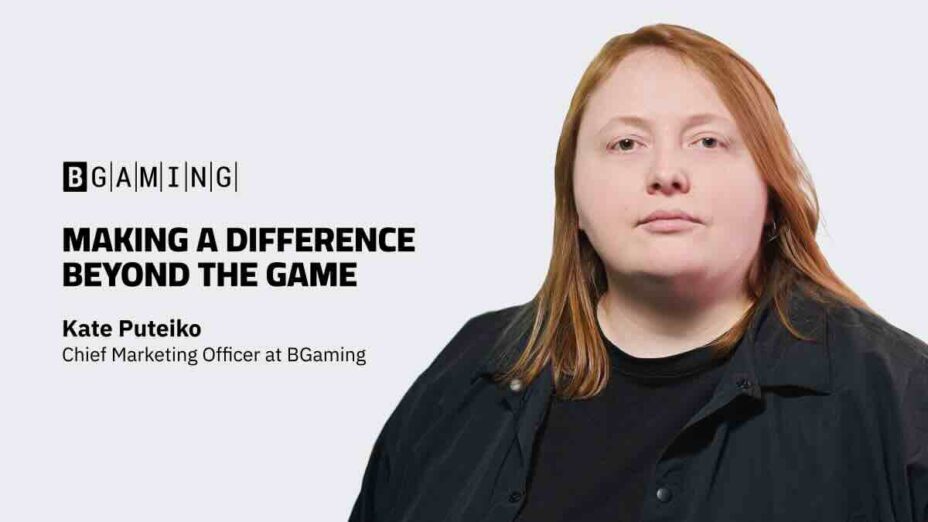
Kate Puteiko, CMO at BGaming, explores why sustainability is becoming part of the conversation in iGaming and how conscious business decisions can translate into meaningful action
The iGaming industry has spent years focusing on innovation, expansion, and the delivery of better player experiences.
But as the industry grows, another question is becoming increasingly relevant: what responsibility do gaming companies have beyond their products and business performance?
Sustainability is becoming part of that conversation. And while the term is often associated with environmental protection, its meaning for businesses is much broader. It also involves how companies use resources, engage employees, support local communities, and consider the long-term impact of their decisions.
For an industry built around digital products, environmental responsibility may not seem like the most obvious priority. Yet iGaming companies operate far beyond the digital world, organizing large-scale events, producing merchandise, and establishing a presence in communities across different markets.
“Sustainability doesn’t have to start with a huge initiative. Sometimes it’s about looking at the things you’ve been doing for years and asking whether there’s a better way to do them,” says Kate Puteiko, CMO at BGaming.
From industry events to conscious choices
International exhibitions are an essential part of iGaming, but they also require considerable resources, from stand construction and printed materials to merchandise and logistics.
For BGaming, preparations for SBC Summit Lisbon 2026 became an opportunity to reconsider some of these familiar practices. The company incorporated recycled-material panels into its stand and replaced traditional brochures with digital product information, saving approximately 16 kg of paper.
Its merchandise also reflected this approach. Alongside organic cotton items, BGaming created custom poker sets from 100% recycled plastic, primarily sourced from post-consumer waste. Additional gifts included carabiners produced using 7 kg of recycled plastic.
“At exhibitions, we naturally want to create something memorable. But I think it’s equally important to consider the materials we use and what happens to them afterwards. We wanted our presence in Lisbon to reflect that thinking,” Kate Puteiko explains.
These decisions became part of BGaming’s broader sustainability initiative in Portugal, developed under the WE CARE. WE ACT message, which extended beyond the exhibition itself.
Why local partnerships matter
As iGaming companies expand internationally, they increasingly interact with communities with different needs and priorities. This raises an important question: should businesses introduce the same CSR initiatives everywhere, or develop projects that respond to local circumstances?
BGaming has focused on the latter, working with organizations that understand their communities and have expertise in addressing local challenges.
In Portugal, this led to a partnership with VIVA Lab, a Porto-based organization working across education, digital fabrication, and recycling.
BGaming donated €15,000 to support VIVA Lab’s Precious Plastic project and Plastic Play educational activities. The funding will support 10 recycling workshops for up to 240 students, during which approximately 60–70 kg of plastic is expected to be transformed.
“One of the things I particularly appreciate about VIVA Lab is the educational aspect. It’s not just about recycling plastic. It’s about helping young people understand that materials can have a second life and encouraging them to think differently about waste,” says Kate Puteiko.
The project also includes educational materials that could allow similar activities to be replicated by other organizations across Europe, extending its potential impact beyond the initial workshops.
Bringing employees into the conversation
Another important dimension of sustainability is employee engagement. Involving teams directly can make corporate responsibility more tangible and meaningful.
Following SBC Summit, BGaming employees participated in a beach clean-up organized by Lisbon Oceanarium. In just two hours, they collected 2 kg of plastic and 1 kg of cigarette butts from the local coastline.
While such activities cannot solve marine pollution at its source, they help raise awareness and encourage people to take an active role in environmental protection.
“For me, the beach clean-up was one of the most meaningful parts of the project. We spend so much time talking about teamwork in business, but this was an opportunity to come together and do something useful outside our everyday responsibilities,” Kate shares.
Making responsibility part of business thinking
There is no single sustainability approach that works for every iGaming company. And isolated activities, however valuable, should not be confused with comprehensive environmental transformation.
But individual choices can contribute to a broader shift towards more responsible business practices.
For BGaming, the Portugal initiative brought together resource-conscious event production, environmental education, local partnerships, and employee participation. The next step is to carry these lessons into future projects rather than treating them as a one-off campaign.
“I don’t think sustainability is about claiming that every decision we make is perfect. It’s about questioning familiar processes, making better choices where possible, and supporting initiatives with a clear purpose,” Kate concludes.
“As an industry, we have the resources, creativity, and connections to contribute beyond our products. The important thing is to turn that potential into action.”