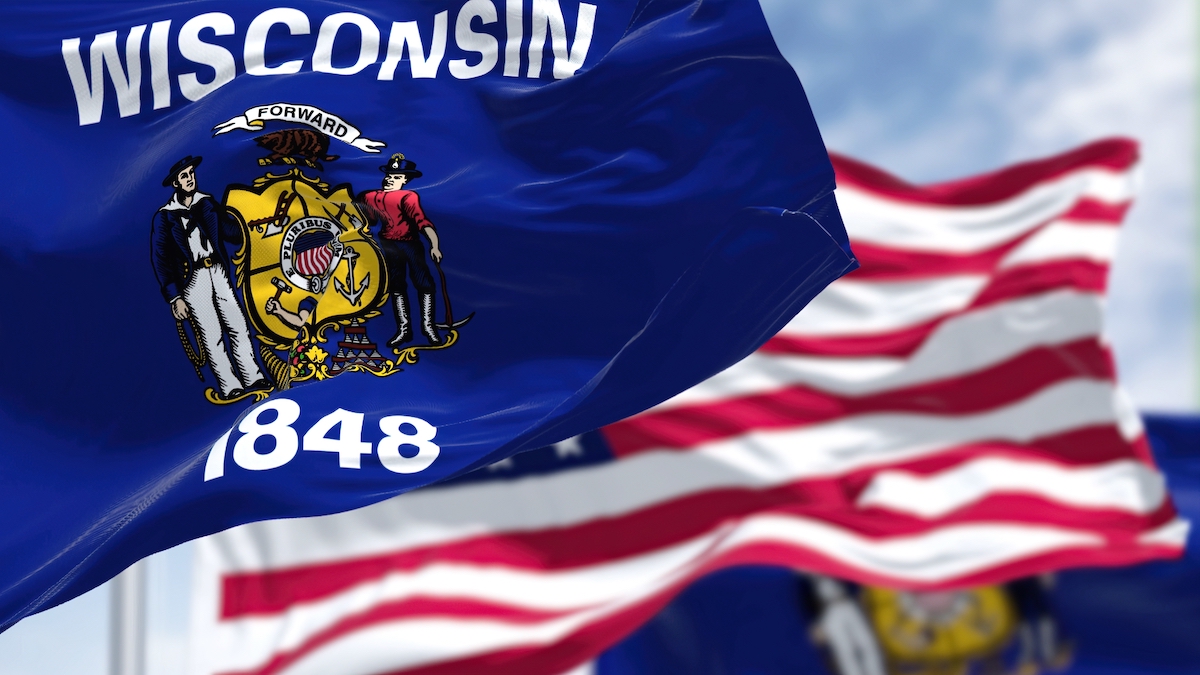
Executive order bans state government workers from profiting or benefiting from insider information used on prediction markets
Wisconsin has become the latest US state to prohibit state government workers from using inside information to bet on prediction markets.
Governor Tony Evers signed an executive order into law last week, which aims to protect public trust and integrity by prohibiting Wisconsin state government workers from disclosing or using insider information in order to personally profit or benefit.
The governor’s order is designed to specifically respond to the growing proliferation of engaging in prediction market contracts and betting, and the use of non-public information by individuals to benefit themselves, their family, or relatives.
“State workers in Wisconsin work hard every day in dedicated service of the people of our state, often going above and beyond their job description and daily responsibilities to support Wisconsinites and our communities and meet their needs,” said Governor Evers. “Maintaining public trust and confidence in our state government demands and depends upon transparency, accountability, and integrity, and upholding the fundamental tenet of public service that, above all, the work must be for the benefit of the public good and not for personal greed or gain. That is a commitment we take seriously, and we must continue to do so.”
Wisconsin becomes the latest state to have taken action to ban insider trading on prediction markets, following in the footsteps of Illinois, New York, Maryland, and California. The US Senate has also similarly approved a new rule barring Senators from trading on prediction markets.
In related news, the US District Court for the Western District of Wisconsin issued a significant ruling last week affirming the Ho-Chunk Nation’s authority to enforce the Indian Gaming Regulatory Act (IGRA) and protect tribal gaming sovereignty against unauthorized online sports betting operations.
The court denied efforts by Kalshi and affiliated entities to dismiss the Nation’s core IGRA claims and found that the Ho-Chunk Nation sufficiently alleged that Kalshi’s online sports event contracts constitute Class Ill gaming on tribal lands without authorization or compliance with the Tribal-State Gaming Compact.
“The Ho-Chunk Nation has consistently maintained that tribal governments retain the sovereign authority to regulate gaming within our jurisdiction,” said Jon Greendeer, president of the Ho-Chunk Nation. “This decision confirms that tribal sovereignty and IGRA protections do not disappear simply because private entities attempt to rebrand gambling. We have followed the rules at every step and will continue to defend our exclusive rights to operate gaming under the IGRA.”
The court also rejected arguments that federal commodities regulations override tribal gaming authority under IGRA – an issue the Nation views as critically important for tribes addressing the rise of online wagering platforms that encroach upon highly regulated tribal gaming. While the court denied preliminary
injunctive relief at this stage, it did so solely on the issue of immediate irreparable harm – not on the merits.
The court expressly found that the Nation demonstrated a likelihood of success on its IGRA claim.
The Nation will review the decision and determine next steps, including whether to pursue an appeal to the Seventh Circuit Court of Appeals on any aspect of the ruling.
“This case is larger than one tribe or one company,” continued Greendeer. “It concerns the future of tribal regulatory authority in the digital age and the continued strength of IGRA as a cornerstone of tribal self-governance and economic self-determination.”
The case will now proceed in federal court on the Nation’s IGRA claims.