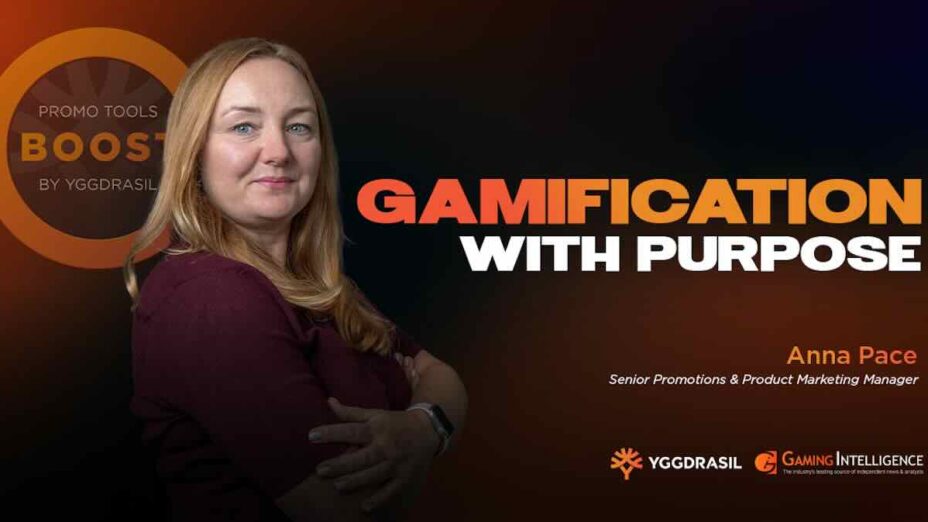
Yggdrasil senior promotions and product marketing manager, Anna Pace, discusses the studio’s BOOST tools and the future of gamification in iGaming
What was once viewed as a “nice-to-have” has become a strategic necessity. In 2026, gamification tools are playing a central role in helping operators retain players, increase activity, and differentiate their offerings.
Gaming Intelligence spoke with Anna Pace, senior promotions and product marketing manager at Yggdrasil about the studio’s BOOST tools and the future of gamification in iGaming.
Has the industry reached a point where promotional tools are no longer optional for operators
Definitely yes! The number of games out there is huge, and it’s becoming more difficult for any title to stand out or even be seen. Promotional tools help solve that by giving players an extra reason to try and keep playing a game for longer.
Operators are also competing among each other and with illegal websites that offer very aggressive promotions and incentives. While regulated operators have to work within stricter rules, they still need to find creative ways to keep players interested and entertained. If they’re not offering engaging experiences or added value, players may simply look elsewhere.
That’s why promotional tools have become such an important part for operators and studios. They help games get noticed, keep players engaged, and stand out in a very crowded market.
What trends have you observed from operators using BOOST tools in the first months of 2026? Is there any surprising player behavior emerging?
I wouldn’t say it’s surprising; player behavior very much follows general trends. People’s lives are becoming increasingly fast-paced, and there’s a growing expectation for immediate rewards.
We’ve observed traditional promotions, such as leaderboards running for several weeks, are generally not as effective as they once were because players are less willing to wait for an outcome.
What’s working particularly well are promotions that create regular moments of excitement, whether that’s instant prizes, short-term challenges, or missions that give players a sense of progression and achievement.
Interestingly, it’s not always about offering bigger rewards. Players are often more involved when they receive smaller rewards more frequently, because it keeps the experience fun, interactive, and rewarding from start to finish.
What gaps still exist in gamification and engagement today, and how is Yggdrasil looking to address them?
There are already a lot of gamification and promotional tools available in the market, so I don’t think the industry needs more tools. The real gap is in how those tools are used and how relevant they are to different types of players.
A lot of promotions today are still built around a one-size-fits-all approach, where the same campaign is shown to everyone. Some operators do segment players such as high-rollers and regular players, but going beyond that often requires a lot of manual setups.
That’s where we’re focusing on our efforts. We want to make it easier for operators to deliver promotions that feel more personalized and relevant to different player groups, without creating extra complexity for their teams. We see that as one of the biggest opportunities for gamification going forward: not just offering more promotions but offering smarter ones.
Which BOOST Tool delivers the strongest business impact today?
It really depends on what the operator is trying to achieve and how they measure success. Different tools are designed to support different objectives, whether that’s player acquisition, engagement, retention, or reactivation.
That said, if I had to highlight one of our BOOST Tools, would be Prize Drops because it continues to deliver some of the strongest results. It’s simple, easy for players to understand, and most importantly, it provides instant rewards.
One of the biggest advantages of Yggdrasil BOOST Tools is how easy it is for operators to get started. All four promotional tools – Free Spins, Prize Drops, Tournaments, and Missions – are delivered alongside the game and are ready to launch with minimal effort.
By removing operational barriers, operators can launch promotions quickly, capitalize on momentum, and get the most value from their campaigns while player interest is at its highest.
What does Yggdrasil believe most competitors still get wrong about player engagement
Innovation in gamification is important, but the real opportunity lies in creating experiences that are simpler, more relevant, and easier for players to engage with.
One thing we believe the industry sometimes underestimates are design and user experience, especially on mobile. Most players today play through their phones, so every aspect of the experience needs to feel seamless and frictionless. Promotional tools should look and feel like a natural extension of the game, matching the visual quality players expect.
At Yggdrasil, our focus is on creating experiences that are simple, visually engaging, and easy for both operators and players to use.
What’s the biggest misconception operators still have about gamification in 2026?
I think one of the biggest misconceptions is that some operators think gamification is just about giving away rewards, and they stick to only/mostly Free Spins or keep doing the same type of campaign repeatedly. It might work for a while, but to grow the brand and keep players coming back, you have to surprise your customers with new exciting offers every now and then.
Additionally, one thing people often get wrong is thinking that promotions only drive activity on the game while they’re running. We’ve observed that players who discover a game through a promotion often keep coming back to it after the campaign ends. That’s a huge benefit for both operators and game studios because it helps create long-term engagement, not just a short boost.
If an operator could only implement one engagement mechanic tomorrow, which would you recommend and why?
I honestly can’t imagine an operator running a successful business today without some form of gamification. Free Spins are a must-have, but they’re only one piece of the puzzle. The best results come from combining different mechanics and using them strategically for different player groups.
Today, we have access to more player insights than ever before, allowing operators to better understand player behavior and preferences in real time. This makes it possible to tailor promotional experiences much more effectively and react faster to what players actually want.
So while I wouldn’t recommend relying on just one mechanic, I would recommend investing in a flexible gamification strategy that combines different tools, personalization, and a seamless player experience.
Partner Editorial