
Scientific Games’ senior vice president of digital gaming, Keshav Pitani, tells Gaming Intelligence how AI and personalisation can help drive growth across the iLottery sector
Keshav Pitani is much more than a digital content expert. With an extensive background in engineering, the SVP of digital gaming of Scientific Games, who has been a steadfast innovator at the supplier in some form for 17 years, is perfectly placed to lead development of online lottery games.
While the earlier years of his career included a spell as an engineer at the Tokyo Research Labs division of IBM, Pitani first entered the world of Scientific Games companies when joining Bally Technologies as senior director product development in April 2008. His seven years in that role saw the sale of Bally Technologies to Scientific Games for a whopping $5.1 billion in late 2014.
Reflecting on his earlier years in the framework, Pitani (pictured above) tells Gaming Intelligence: “Around 10–15 years ago, there was a significant issue with everything being developed as a single piece of software. We addressed that by introducing middleware, and I wrote the original game development kit for Scientific Games.
“I then became fascinated by how games are developed and designed. I moved into game design and launched several new verticals across both digital and retail channels.”
In May 2015, Pitani stepped into the position of vice president of product & technology at Scientific Games, with his duties including the task of driving technology innovation and spearheading new product development.
Seven years later, Pitani’s involvement with the company broke off into another direction when it changed its name to Light & Wonder.
However, while other divisions within the company were absorbed into the Light & Wonder umbrella, the rebrand did not include the lottery business, which became a standalone entity.
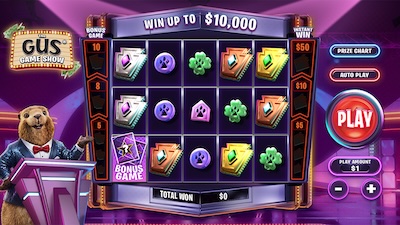
Pitani became SVP of digital gaming of the lottery business in May 2025. The company’s lottery portfolio currently contains more than 300 games and by the end of this year, Pitani expects to be supplying digital games in lottery markets across North America, South America and EMEA.
Pitani has of course witnessed plenty of change across the online lottery industry since he first moved into it, and in a similar vein to sports betting, regulation opening up in the US has been a standout shift in that period.
Expanding on why he thinks digital lottery products are standing the test of time, Pitani says: “Digital lottery has retained some important advantages. People still have a great deal of trust in lotteries. Around one in two people play the lottery at some level, compared with approximately one in four or five who play casino games or iGaming products.
“The UK and parts of mainland Europe adopted digital lottery relatively early. Experience with iGaming helped those markets develop their digital lottery offerings. In the US, only a limited number of markets initially embraced digital lottery, although more lotteries are bridging the gap between physical retail and digital experiences.”
AI high on the agenda
Among the highlights of Pitani’s time at Scientific Games since the Bally Technologies takeover are launches in the US and Canadian video lottery markets. He has also designed a real-time artificial intelligence (AI) product for high-speed casino play.
Naturally, as it is with all industries at the present time, AI is an important part of the thinking at Scientific Games. While a casual observer may wonder how exactly AI can really develop a lottery game, Pitani foresees an era where the transformation is going to be extremely noticeable.
“I think we’re about to see significant change across the gaming industry and beyond, driven by AI and the efficiencies it can deliver,” he says. “We’re using AI to prototype and test games. Previously, testing game mathematics and other design elements could take weeks. Now, it can take days or even hours.
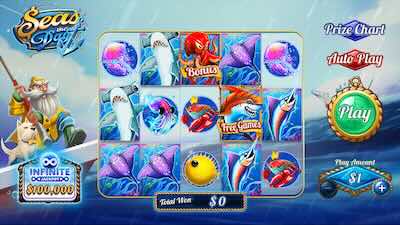
“We’re discarding more ideas than ever before. That might sound wasteful, but it means we’re reaching better ideas much faster. Processes that once took weeks or months can now be completed much more quickly.
“Consider the player experience we’re trying to create for MONOPOLY [a licensed-branded Scientific Games iLottery game] or another new game. We need to understand how players will interact with it, what they will feel and what kind of experience they’ll have. AI has significantly shortened that development journey.”
Personalisation not far away
While digital lottery games have become more commonplace in recent years, Pitani believes there is a clear method for interaction to improve, and that’s via personalisation. While user behaviour dictates which particular streams can be recommended to them by the likes of Netflix and YouTube, the iGaming industry more generally is still playing catch up in this area.
However, Pitani believes it is only a matter of time before regular iLottery players are familiarised with specific offerings tailored to their preferences.
“Initially, personalisation will probably focus on helping players navigate their choices across a game library,” he explains. “Over time, it could become more sophisticated, extending to recommendations based on gameplay preferences and mechanics, such as volatility.
“We haven’t yet persuaded many lotteries to adopt that deeper level of personalisation, but they’re interested in helping players discover games that suit them. That’s the next step in how we want to use AI to help lotteries compete in an increasingly crowded gaming entertainment market.”
Pitani has been around long enough to have a strong idea of when we could start to see the interfaces of online lottery offerings being overhauled to personalise experiences.
“My estimate is that we’ll start seeing these features by the middle of next year, as some of the more progressive lotteries will want to introduce them quickly in response to developments elsewhere,” he says. “I expect us to be among the first suppliers to offer them. However, I don’t have confirmation from any lottery that it will launch the technology next year.”
Market challenges
Since becoming an independent, 100 per cent lottery-focused company from Light & Wonder, there have been some standout market alterations Scientific Games has had to contend with – changing player demographics, regulatory changes, and shifts towards mobile being among them.
A key product Scientific Games is at the forefront of is branded content, in particular with linked games. In 2026, Scientific Games began launching the omni-channel GAME SHOW EXPERIENCE in 13 US markets, connecting players to a TV game show-themed, fully-managed winners’ event, rewarding them with a unique experience, including a five-day/four night trip to Los Angeles and additional prize opportunities.
The games feature themed scratch-off, fast play and digital games showcasing recognisable TV game show brands such as THE PRICE IS RIGHT, FAMILY FEUD and PRESS YOUR LUCK. Up to $10 million in cash prizes can be won during the event, which takes place on THE PRICE IS RIGHT TV game show stage. This is the latest introduction of linked games first introduced by Scientific Games in 2007 before Pitani’s time.
Participating lotteries include Iowa, South Carolina, Tennessee, Maryland, Delaware, South Dakota, Arkansas, Pennsylvania, Texas, Washington D.C., Kansas, Illinois and Maine. This follows Scientific Games’ previous linked games based on brands such as DEAL OR NO DEAL, WILLY WONKA & THE CHOCOLATE FACTORY and GAME OF THRONES.
This provokes questions about whether online lottery content can be split into the same factions as digital slot content, with a mixture of in-house and branded offerings potentially providing the means to drive player acquisition and retention.
This could potentially be one means of attempting to make digital lottery games appeal to a younger adult cohort of players.
It is perhaps unsurprising that Scientific Games’ data shows the more common player demographic for online lottery players tends to be younger than that of retail lottery players.
To what extent does branded content play a part in that, and is that a trend that suppliers are likely to focus on more going forward?

“I think we’re seeing a shift, although the latest data suggests that the younger generation is increasingly engaging with lottery through digital interfaces,” Pitani says. “The demographic is still predominantly the same, but recognised brands and licensed content are helping attract a younger mix of players.
“What’s particularly interesting is that this shift is largely happening through digital channels. We rarely see the same change through retail.”
Pitani has also overseen the implementation of the SG Content Hub; a digital content aggregator and partnership network built specifically for the global online lottery sector which launched in 2023.
Explaining how this has helped to bring multiple studios together in one place, Pitani says: “The aim is to reduce the time needed to integrate a studio to just a few days. Traditionally, integrating a new operator or supplier could take a lottery weeks, or in some cases, months.”
The SG Content Hub initially launched in the UK and New Zealand, as well as several US markets, including Pennsylvania, Virginia, Washington, Washington D.C., and Delaware.
Convergence an ongoing aim
Assessing the standout challenges in the online lottery industry in the coming years, Pitani explains the difficulty in creating games that are successful across different markets.
One particular trend that can perhaps bridge this gap is convergence of products.
“Casino and iGaming products depend on random number generation, whereas lotteries work with a predetermined pool of outcomes,” Pitani says. “Technology has advanced to the point where the two sides can appear to converge. You can create an experience that looks like one type of game while using a different underlying mechanism.”
With Scientific Games having to constantly react to industry and consumer developments, and new markets likely to open up, Pitani’s first-hand expertise will be crucial as the supplier attempts to navigate its way around those challenges.
FAMILY FEUD, THE PRICE IS RIGHT and PRESS YOUR LUCK: ™/®/© FremantleMedia 2026.
MONOPOLY © 1935, 2026 Hasbro. All Rights Reserved. Licensed by Hasbro.
WAVE™ is a trademark of Scientific Games, LLC.