
Scientific Games digital president Matt Lynch speaks to Gaming Intelligence about the company’s efforts to make the lottery industry more progressive and focused on the next generation of players
It is fair to say that it has been a whirlwind 18 months for Matt Lynch since joining Scientific Games as president of digital in October 2024.
It is never easy for someone new to an industry to hit the ground running, but the company’s leaders planned it that way.
When Lynch joined the global lottery company a year and a half ago, Scientific Games had recently split from Light & Wonder and was in the middle of building an entirely new technology platform.
The company also had its hands full modernizing the UK National Lottery for Allwyn – the largest technology conversion it has ever undertaken – alongside other major conversion projects for Lotto NZ and US state lotteries in Delaware and Pennsylvania.
Of course, it helps when you can call on more than 20 years of digital leadership, which is what Lynch brought to Scientific Games from his time at Amazon, Samsung, Symantec and Firework.
“I joined from outside the lottery industry, so the first 18 months has been a lot about learning about the space,” says Lynch. “There’s a lot to learn, not just in lottery, but broader gaming.”
His early career at Amazon involved scaling several product categories into $1 billion-plus businesses, but he began his eight-year stint at the e-commerce giant in the video gaming sector.
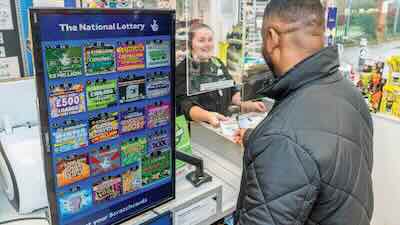
“I started in gaming and launched a business there, so I’m familiar with it from the side, but this is so much different,” Lynch says. “I stepped into the middle of Scientific Games’ digital platform transformation, and we were largely focused on executing to launch in the UK, New Zealand, North Dakota and also Delaware. We had the relaunch of the Pennsylvania lottery platform on our new platform. So a lot of it has been largely focused on ensuring the platform was ready for the next generation of players, and then getting it launched.
“But secondarily, coming in and learning the industry hands-on, I’ve been focused on trying to attract new talent into the lottery space, and bringing people in that I think will help us scale as we continue towards the digital evolution.”
As someone from outside the industry himself, Lynch knows the value that experience in other industries can bring to Scientific Games.
“There is expertise we have to learn from other industries that will help us scale,” he says.
Thinking about the customer
Lynch believes that his time at Amazon has set the framework for his career.
“A lot of what I’ve been able to bring is thinking about the customer and building for it, from the customer backwards,” he explains. “If we think through what that player experience needs to be ideally, how do we start putting the building blocks in place to get there? It’s a gap I’ve noticed across the industry – thinking through the end player experience – and how are we building solutions?
“We’re working through lotteries, we’re working through retailers, but how are you building that journey so players have a great experience across omnichannel? A lot of that is what I’ve been brought in for. Really thinking about the omnichannel experience versus just pure digital or pure retail.
Lynch adds: “Players are indifferent as to where they buy the product and how they interact with the product. We just want to make that experience seamless.”
His early experiences at Amazon gave him a unique perspective as US retailers such as Nordstrom expanded into the digital e-commerce world twenty years ago.
“What I learned from the experience was when e-commerce launched in the US and globally, the same thing happened,” he says. “Everybody launched digital as a singular entity, and saw that digital was competing with their retail business. It took a few years, but then people started to integrate that experience and really think about the customer.
“What Nordstrom did specifically – which I thought was a game changer from the experience perspective – was to integrate the back-end of their inventory systems. So if you’re shopping online, you can have it shipped to your local store. And if you’re at the local store and they don’t have it in stock, they can ship it to your home, because they knew where all of their inventory was.
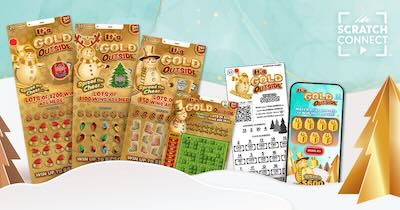
“They were effectively creating a uniform experience for me, whether I was shopping online or shopping offline. And I think that’s the key takeaway for lotteries. How do we start to build that seamless experience? When we think about launching products, a scratch ticket or an eInstant game, we don’t connect those unless it’s typically a licensed property. So how do you start to connect that journey?”
Lynch says that even the definition of these “channels” will have to expand.
“When we think retail, we really just think physical retail, not the digital retail aspects of the convenience store. And when we talk about digital, we’re typically talking about the lottery’s direct website. We’re not really thinking about distribution and the convenience of the player, and how the player wants to experience the product.”
From a player perspective, Lynch believes that playing the lottery should be an experience, whatever the channel.
“eDraw is still a draw game whether I buy Powerball at the store or whether I buy it on my phone – it’s the same experience. So how do we get out in front of that and change that kind of the nomenclature? People just want to play lottery.”
Competing for Gen Z’s attention
In this increasingly digital age, attention is becoming the primary currency. So how do lotteries compete with the likes of TikTok and Netflix?
“It’s a great question. It’s not just that we’re all competing for wallet share, but at the end of the day, we’re actually competing for time. We’re thinking about how we get more progressive and how we approach our games for customers. I think that’s a piece of that. There’s a notion here of we focus a lot on cash, and you think through other experiences that customers might have, whether it be experience, whether it be merchandise, there’s different solutions. I don’t think the industry has segmented players enough to really be able to offer them solutions that are marketed towards them, or talk about personalization.”
One of the challenges for the digital lottery sector is that there is a limit on the amount of games that players can play.
“It’s very different to iGaming where there is more of the Amazon/iTunes experience or app store,” Lynch explains. “Players have access to thousands of different games, and I think we’re somewhat limiting the players we can engage because we’re very focused on the core.
“Personalization will come into play, but there’s a lot we need to do just to expand and appeal to different demographics than we’ve done in the past. So if we think about competing for time, convenience is an element, and digital is a piece of it, but that’s just a small piece.”
Lynch wants to be able to expand that distribution so that when players come in, a lottery has games and experiences tailored towards them specifically.
“We are working through a couple things that I can’t share right now about expansion of distribution,” Lynch says. “Being where the customers are at the right time, I think that’s really critical. We’re also working from a content studio perspective on how to create new content, and having the right licensed properties to go to market.
“Looking at everything, we’re very focused on expanding the experience portfolio to be able to go after different customers. It’s a huge focus for us and the lotteries.”
Once-in-a-lifetime experiences
Scientific Games has been offering “experiences” to players for nearly 20 years through its Linked Games concept, offering lottery players once-in-a-lifetime opportunities to win experiential prizes themed to brands such as DEAL OR NO DEAL and WILLY WONKA & THE CHOCOLATE FACTORY.
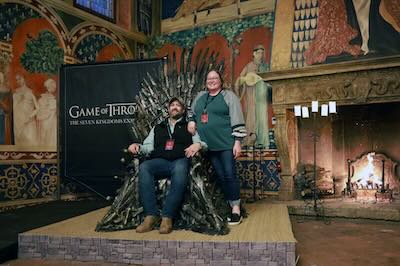
In 2024, participating lotteries launched GAME OF THRONES-themed instant and digital games, offering players a chance to win their way to Napa through digital second-chance drawings.
Then last year, 100 winners from nine states were chosen to participate in The Seven Kingdoms Experience in Napa, California, for four days of adventure and celebrations in a medieval-style castle winery. This included multiple rounds of brand-immersive games, giving trip winners a second chance to win their share of up to $7 million, while participants also got to cheer on their own “Champion” in a live jousting tournament.
This year Scientific Games will be offering a JURASSIC PARK Experience, with over a billion retail tickets already sold.
Since debuting in 2007, the company’s white glove events and multi-state Linked Games have generated close to $7 billion in retail sales.
“We see such great success in this program, and you see from a player perspective how much they enjoy the experience. I went to the one last year and people are crying. These are once-in-a-lifetime experiences for people and now its about figuring out how we take that concept and expand it, because it is unique,” says Lynch.
For Scientific Games, this is about changing the dynamic of historical cash prizes to something that’s more interesting to a broader set of people.
“Cash is always important for everybody. But you know, once-in-a-lifetime experiences are very different. For JURASSIC PARK this year, people are going to Hawaii, where the original JURASSIC PARK was filmed. It’s pretty amazing to see the experience and to see the customers go through that.”
Personalization and customer segmentation
With most US lotteries still heavily reliant on retail sales, this means that most of the lottery sales are anonymous cash transactions at retail convenience stores. This makes it harder to understand and target players.
Lynch says that this is the biggest challenge for the industry, not only in the United States but globally.
“There’s a good chunk of people that you just don’t have a lot of information about because they’re paying in cash, and they’re unknown,” he explains. “But as digital continues to emerge and grow, and we have people entering in second chance, you’re starting to get that data that then you can start to create personalized experiences.
“It’s much easier on the digital side to create a personalized experience for a customer based on their playing habits, but we’re starting to see it come into retail.”
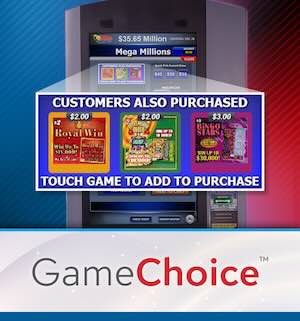
Last July, Scientific Games launched a new product, GameChoice, which makes it easier for players to discover new games and navigate their purchasing journey at self-service lottery machines.
Initial deployments in nearly 10,000 lottery vending machines drove a significant increase in cross-portfolio game purchases – buying scratch and draw games together.
In its first month, GameChoice generated recommendations in more than nine million shopping baskets, generating around $10 million in retail sales. The revenue impact to the lottery was estimated at $280,000 per day or $105 million per year. Pretty substantial figures.
“We’ve seen massive success in retail with just a basic personalization,” Lynch says. “It’s driven almost close to a billion game recommendations in the year, and people engage with it because offline, you’ve just never really had the opportunity to personalize.
“Today, we’re saying generally ‘people who bought this also bought this’. This will evolve to ‘we know you bought this – this is your next game’.
Creating connections between players
Scientific Games is always looking at how to create more connected and social experiences for players, particularly for digital play.
The success of multi-state lottery games in the US has been one way to achieve this. While Powerball and Mega Millions dominate the headlines as the undisputed kings of the multi-state landscape, other games such as Lucky for Life, Cash4Life and Lotto America have gained significant traction in recent years.
With the UK National Lottery set to launch a tailored version of Powerball later this year, giving players a chance to win the shared jackpot, the lottery sector is moving ever closer to the possibility of a lottery game that is available to players across the world. But is it actually possible?
“As we think about a global lottery, and starting to drive that community from a global sense, it’s a great first step,” says Lynch. “I wouldn’t say it’s a pipe dream. Players will require it as we become a more global community. I really like what Powerball is doing, but I think it will be necessary for the lottery to evolve, especially as we think about the next generation of players who aren’t necessarily tied into a specific jurisdiction – they’re going to want experiences across the globe.”
It might be some time before we have a truly global lottery game, but Scientific Games is paving the way for this future as the digital partner of the Lotteries Entertainment Innovation Alliance (LEIA), a collaboration between five European lotteries – Danske Spil in Denmark, FDJ United in France, Norsk Tipping in Norway, Svenska Spel in Sweden and Veikkaus in Finland.
While it remains early days, Lynch says that conceptually it’s about pulling together different jurisdictions to create a shared experience to drive more engagement.
“If we look at the success of sports wagering in the US, players are also experiencing an event at the same time, so it becomes more social and engaged. Multi-player games are a subset of that. And I think all of those experiences are important as we evolve.
“Regardless of where regulations stand, that will be an important area as the lotteries evolve, and how to create it, either online or offline. People want community, but that sense of community is very different for the next generation customer.”
The next step is to create that experience online for people to engage.
It’s taken 18 months for Lynch to get to this point, but his work is only just beginning.
Deal or No Deal TM & © 2002, 2026 Endemol Shine IP B.V. Licensed by Banijay Brands Limited.
GAME OF THRONES and all related characters and elements © & ™ Home Box Office, Inc. (s26)
JURASSIC PARK © Universal City Studios LLC and Amblin Entertainment, Inc. All Rights Reserved.
WILLY WONKA & THE CHOCOLATE FACTORY and all related characters and elements © & ™ Warner Bros. Entertainment Inc. (s26)
GameChoice™ is a trademark of Scientific Games, LLC.